

Table of Contents
- Buy Refurbished or Open-Box Electronics
- Time Your Purchase for Sales Events and Seasonal Deals
- Use Price Matching Policies to Lock in the Best Rates
- Take Advantage of Trade-In Programs
- Track Prices with Browser Extensions and Deal Sites
- Choose Mid-Range Models Over Flagship Products
- Reduce Hidden Costs: Energy, Subscriptions, and Warranties
- Conclusion
Buy Refurbished or Open-Box Electronics
Refurbished electronics cost significantly less than new models while delivering the same core functionality. These devices have been returned, tested, and restored to working condition by manufacturers or certified third parties. Open-box items, products returned unopened or barely used, offer even deeper discounts because they've never left the original packaging.
The difference between refurbished and open-box matters. Refurbished devices go through a full quality check and typically come with a warranty. Open-box products may lack original packaging but often include all components and accessories. Both options let you save substantially compared to buying new.

When shopping for refurbished electronics, verify the seller's return policy and warranty coverage. Reputable retailers clearly disclose the refurbishment process and any cosmetic wear. At The Daily Drop by Ed Rivera, we curate refurbished items that meet quality standards while keeping prices accessible. Many budget-conscious shoppers find refurbished devices deliver 70-80% of the savings of used electronics while maintaining reliability.
The tech lifecycle means last year's flagship becomes this year's bargain. A refurbished model from six months ago performs identically to the current version at a fraction of the cost. This approach eliminates planned obsolescence concerns, you're getting a device that's already proven its durability through real-world use.
Time Your Purchase for Sales Events and Seasonal Deals
Strategic timing transforms electronics shopping from reactive to intentional. Sales events cluster around predictable calendar windows where retailers slash prices to clear inventory or drive traffic.
Black Friday and Cyber Monday represent the year's deepest discounts on consumer electronics. Retailers compete aggressively during this period, offering bundle deals and price cuts that rarely appear at other times. Back-to-school shopping season (July through September) brings significant markdowns on laptops, tablets, and tech accessories as retailers target students and parents.
Holiday shopping seasons, particularly November through December, feature sustained promotions across most product categories. January clearance sales help retailers liquidate previous-year inventory to make room for new models. Memorial Day, Labor Day, and Prime Day (Amazon's mid-July event) each trigger competitive pricing across the electronics market.
Understanding depreciation patterns helps you time purchases strategically. New product launches cause previous-generation models to drop in price within weeks. Waiting for the next version release often saves money on the current model without sacrificing performance. Mid-range devices typically see price cuts faster than flagship products because manufacturers prioritize clearing stock.
Track release schedules for products you're considering. Most manufacturers announce new models months in advance. This advance notice lets you plan purchases around price drops on current inventory. Many retailers honor price matching during promotional periods, which we'll cover in the next section.
Use Price Matching Policies to Lock in the Best Rates
Price matching eliminates the guesswork from electronics shopping. When a retailer offers a lower price than a competitor, price matching policies require stores to honor that lower rate. This feature transforms the shopping experience from hunting across dozens of sites into using competitive pressure within a single transaction.
Major retailers maintain price matching policies with specific terms. Most require that you present proof of the competitor's price, either a printed ad, online screenshot, or link. The competitor's price must be current and available, not a historical sale. Some retailers match prices for a limited window after purchase, protecting you if prices drop shortly after you buy.
Price matching works best when you've identified the specific model you want and researched current market rates. Bring documentation of at least two competing prices to strengthen your negotiating position. Many retailers will match prices from online competitors, not just physical stores, which dramatically expands your use.
The psychology of price matching favors prepared shoppers. Retailers expect you to do research. Having that research ready, specific prices, competitor names, and dates, signals serious intent and makes store staff more willing to accommodate requests. Casual price matching requests without documentation often get declined or require manager approval.
At The Daily Drop by Ed Rivera, we emphasize the importance of documentation when using price matching. A screenshot with the date and retailer name carries more weight than a verbal claim.
Take Advantage of Trade-In Programs
Trade-in programs convert your old electronics into credit toward new purchases. Manufacturers and retailers offer these programs to reduce barriers to upgrading while capturing used devices for refurbishment or recycling. The trade-in value depends on the device's age, condition, and functionality.
Most trade-in programs work through a simple process: you provide details about your current device, receive a quote, then ship the old unit to the retailer or manufacturer. Once they inspect it and confirm condition, the credit posts to your account for immediate use toward a new purchase. This approach combines the convenience of selling with the simplicity of a direct purchase.
Device condition dramatically affects trade-in value. A phone with a cracked screen receives significantly less credit than one in pristine condition. Functional devices with minor cosmetic wear typically qualify for the highest trade-in amounts. Completely non-functional electronics may still have value for parts or recycling, though the credit amount drops substantially.
Trade-in programs from major manufacturers often exceed the value you'd receive selling the device privately. The convenience factor, no shipping hassles, no payment delays, instant credit, justifies the slightly lower payout. This approach eliminates the friction of managing a private sale while reducing e-waste through proper device handling.
Compare trade-in values across retailers before committing. The same device might receive different valuations from different programs. Spending 30 minutes comparing quotes often yields an extra $50-100 in credit. Document the condition of your device with photos, this protects both you and the retailer during the inspection process.
Track Prices with Browser Extensions and Deal Sites
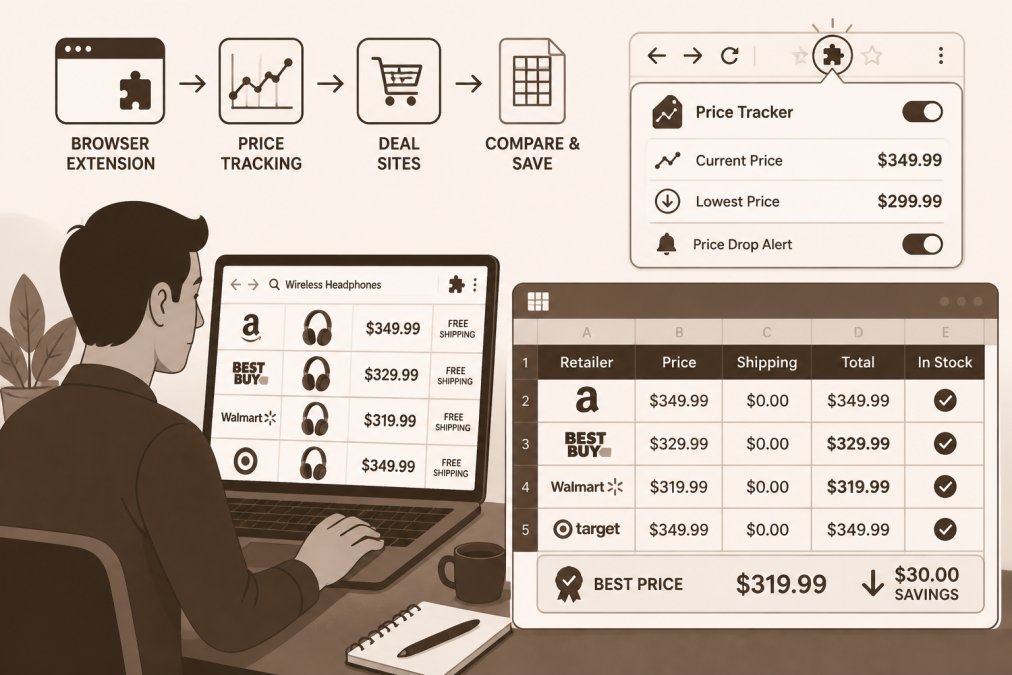
Price tracking technology removes the guesswork from electronics shopping. Browser extensions monitor prices across retailers and alert you when items drop to your target price. Deal aggregation sites compile discounts from hundreds of retailers into searchable databases, letting you spot opportunities without visiting individual stores.
Browser extensions install directly into your browser and track prices on product pages you visit. When you find an item you're considering, the extension shows historical pricing data and sends notifications if the price falls below your threshold. This passive monitoring catches deals you might otherwise miss while you're focused on other tasks.
Popular price tracking approaches include setting up alerts on specific products weeks before you plan to purchase. Many shoppers establish target prices based on historical lows, then wait for prices to approach those levels. This disciplined approach prevents impulse buying while ensuring you capture genuine savings when they appear.
Deal aggregation sites compile promotions from across the internet into centralized locations. Rather than checking dozens of retailer websites daily, you review curated deal lists that filter for legitimate discounts. Many deal sites include community voting, which highlights the best offers and weeds out marginal savings.
The combination of extensions and deal sites creates a comprehensive monitoring system. Extensions catch price drops on specific items you're tracking. Deal sites surface new opportunities you might not have considered. Together, they transform passive shopping into active deal hunting with minimal daily time investment.
Choose Mid-Range Models Over Flagship Products
Flagship electronics command premium prices for features most users never fully use. The difference between a mid-range device and a flagship model often comes down to processing power, camera quality, or design materials, improvements that deliver diminishing returns for typical usage patterns.
Mid-range products deliver 80-90% of flagship performance at 50-60% of the cost. A mid-range smartphone handles email, messaging, web browsing, and social media identically to a flagship model. The flagship's superior processor matters primarily for gaming or professional video editing. For everyday tasks, the performance difference remains imperceptible.
Hardware reliability follows a curve where mid-range devices often outperform expectations. Manufacturers use proven components in mid-range products, avoiding the experimental materials that sometimes appear in flagships. This conservative approach means mid-range electronics often have fewer reliability issues than modern flagship models.
Processing power depreciation happens rapidly in consumer electronics. A mid-range device from two years ago performs comparably to a flagship from three years ago. This reality means flagship models lose value faster than mid-range equivalents. Choosing mid-range today leaves you with better resale value and trade-in options when you eventually upgrade.
Consider your actual use case before paying flagship prices. If you primarily use your device for communication and entertainment, mid-range models handle everything you'll throw at them. Professional users who edit video, run complex applications, or demand maximum performance justify flagship costs. Most consumers fall into the first category and waste money on unnecessary capabilities.
At The Daily Drop by Ed Rivera, we've observed that shoppers often regret flagship purchases within months of buying them. The premium features remain unused while the higher price creates buyer's remorse. Mid-range alternatives let you invest those savings in accessories, extended warranties, or additional devices that actually enhance your experience.
Reduce Hidden Costs: Energy, Subscriptions, and Warranties
The purchase price represents only the beginning of electronics costs. Energy consumption, software subscriptions, and warranty protection add substantial expenses over a device's lifetime. Understanding these hidden costs prevents budget surprises and reveals where real savings opportunities exist.
Energy consumption varies dramatically across device categories. Older electronics consume significantly more power than modern equivalents. Vampire power, the electricity devices draw while powered off, adds up across multiple electronics in your home. Switching from older appliances to energy-efficient models reduces monthly utility bills while lowering your total cost of ownership.
Software subscriptions transform free devices into ongoing expenses. A smartphone might cost $500 upfront, but annual subscriptions for cloud storage, productivity apps, and entertainment services add $200-400 yearly. Calculating these ongoing costs before purchase reveals the true expense of device ownership. Some mid-range devices support free alternatives that flagship models don't, effectively lowering long-term costs.
Warranty and protection plans deserve careful evaluation. Extended warranties add 10-30% to purchase prices but cover repairs that might otherwise cost hundreds of dollars. For devices you use intensively or carry frequently, protection plans often deliver genuine value. For stationary devices like desktop computers, extended warranties rarely justify their cost.
The cost of ownership extends beyond the device itself. Cables, cases, screen protectors, and accessories accumulate quickly. Budget-conscious shoppers often spend 15-25% of the device's price on accessories. Planning for these costs during your initial purchase prevents sticker shock later.
Calculating total cost of ownership reveals which devices actually deliver value. A cheaper device with high energy consumption might cost more over five years than a slightly more expensive, efficient alternative. Factor in subscriptions, repairs, accessories, and energy when comparing options. This comprehensive approach prevents the false economy of choosing the cheapest upfront option.
Saving money on electronics doesn't mean accepting lower quality or outdated technology. The strategies covered here, buying refurbished, timing purchases strategically, using price matching, exploring trade-in options, and choosing mid-range over flagship models, combine to deliver substantial savings without compromise.
Start by identifying which strategies match your shopping habits. Some shoppers benefit most from price tracking and deal alerts. Others find trade-in programs simplify the upgrade process. At The Daily Drop by Ed Rivera, we've found that most savings come from combining multiple approaches rather than relying on a single tactic.
The electronics market rewards informed shoppers. Spending an hour researching options, comparing prices, and understanding your actual needs typically saves hundreds of dollars. That investment in research delivers returns that compound across every device you purchase. Begin with one strategy that fits your lifestyle, then layer in additional approaches as you develop confidence in the process.
Frequently Asked Questions
What is the best time of year to buy electronics?
Black Friday and Cyber Monday (late November) offer some of the deepest discounts. Back-to-school sales (August) and holiday promotions (December) also provide strong savings. However, timing varies by product type, flagship phones often drop in price when new models launch, while smart home devices see consistent deals throughout the year. Tracking prices month-to-month helps you catch unexpected sales outside major shopping events.
Is it worth buying refurbished electronics?
Refurbished electronics can save 20-40% compared to new models and typically come with warranties. The key is buying from reputable retailers with clear return policies. Open-box items are even cheaper but may lack original packaging or full warranty coverage. Check the product's condition rating and verify the seller's return policy before purchasing to ensure you're getting genuine value.
How do price matching policies work at major retailers?
Most major retailers will match a competitor's advertised price if you bring proof (screenshot, link, or ad). Some match for a set period after purchase, allowing you to request a refund for the price difference. Policies vary by retailer and product category, so confirm terms before buying. Price matching works best when you've already identified the lowest price available and present it at checkout or within the return window.
How can I find the best deals on electronics without overpaying?
Use price tracking browser extensions to monitor price drops over time, set up deal alerts on aggregator sites, and subscribe to retailer newsletters for exclusive promotions. Compare the total cost of ownership, including warranties, subscriptions, and energy consumption, not just the upfront price. Avoid impulse buying by waiting at least 48 hours before purchasing, and always check return policies to ensure you can reverse the decision if needed.
This article was written using GrandRanker