

Table of Contents
- Cheap Kitchen Gadgets That Actually Work: What to Look For
- Useful Kitchen Gadgets Under $25 That Deliver Results
- Kitchen Tools That Save Time and Money on Meal Prep
- Must-Have Kitchen Accessories and Small Appliances Worth Buying
Last Updated: August 2, 2026
Finding cheap kitchen gadgets that actually work can feel impossible when drowning in online reviews and marketing hype. At The Daily Drop by Ed Rivera, we understand that budget-conscious shoppers don't want to sacrifice quality for affordability. According to research from Consumer Reports kitchen appliance testing, the difference between a gadget that lasts five years and one that breaks in five months often comes down to smart purchasing decisions rather than price point alone.
This guide shows you exactly which cheap kitchen gadgets deliver real value, which ones to skip, and how to spot quality at bargain prices.
Cheap Kitchen Gadgets That Actually Work: What to Look For
When evaluating budget kitchen tools, focus on three core factors: durability, ergonomic design, and multi-purpose utility. Examine construction materials carefully, stainless steel and food-grade silicone hold up far better than thin plastic under regular use. Check the weight in your hand; heavier often signals denser construction. Look for seamless joins where pieces connect; gaps collect food particles and harbor bacteria.
Ergonomic design matters more than aesthetics. A peeler that sits awkwardly in your palm will sit in a drawer. Finally, prioritize ease of cleaning, smooth surfaces beat textured ones for quick cleanup.
Useful Kitchen Gadgets Under $25 That Deliver Results
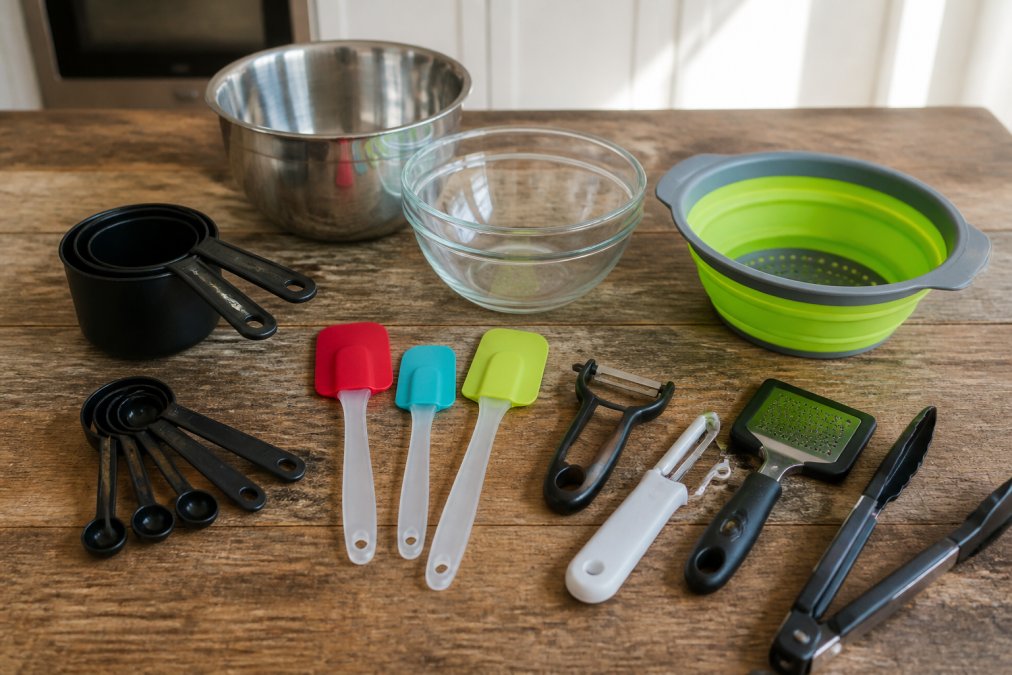
Quality kitchen tools don't require premium pricing. The following gadgets have proven durability and genuine utility without breaking the budget.
Microplane grater replaces a box grater, zester, and fine grater in one tool. The razor-sharp edges handle citrus zest, hard cheese, and chocolate with equal precision. At under $15, it's one of the best value tools available.
Silicone spatula set handles stovetop cooking, oven use, and mixing without melting or degrading. A quality three-piece set costs roughly $12 and lasts years with minimal care.
Stainless steel can opener with a smooth-turning wheel cuts cleanly without sharp edges. Expect to spend $8-12 for one that lasts a decade.
Vegetable peeler with a sharp blade removes skin efficiently without removing half the vegetable. Stainless steel versions cost $6-10 and outlast plastic by years.
Measuring spoon and cup sets in stainless steel won't absorb flavors or stains like plastic. A complete set costs $8-12 and handles both dry and wet ingredients accurately.
Kitchen Tools That Save Time and Money on Meal Prep
Meal preparation efficiency directly impacts your willingness to cook at home rather than ordering takeout. A quality chef's knife, even a budget model, saves more time than a dozen specialty gadgets. A 7-8 inch knife with a sharp edge handles 90% of cutting tasks. Spend $15-20 on a decent stainless steel blade rather than $5 on something that dulls after three uses.
Prep bowls in graduating sizes ($12-15 for a set) organize ingredients before cooking begins. A silicone cutting mat ($8-10) protects your knife edge and provides a non-slip surface. Collapsible colanders ($6-8) save cabinet space while draining pasta and rinsing vegetables.
Must-Have Kitchen Accessories and Small Appliances Worth Buying
Not every small appliance deserves space in your kitchen. Focus on tools that solve real problems in your cooking routine rather than gimmicks.
Immersion blender costs $15-25 and handles soups, smoothies, sauces, and batters. Unlike a full blender, it stores in a drawer. The stainless steel blade construction matters; cheap plastic versions crack under hot soup heat.
Electric kettle saves time and energy compared to stovetop boiling. Budget models ($12-18) heat water in 3-4 minutes with auto-shutoff to prevent overheating.
Kitchen scale ($10-15) improves baking accuracy dramatically. Weight is consistent, unlike volume measurements that vary based on how tightly you pack flour.
Garlic press in stainless steel ($8-12) crushes garlic evenly and requires minimal cleanup.
| Gadget | Price Range | Best For | Durability | Space Required |
|---|---|---|---|---|
| Microplane grater | $12-18 | Cheese, citrus, chocolate | 5+ years | Minimal (hangs) |
| Silicone spatula set | $10-15 | Daily cooking, mixing | 3-5 years | One drawer slot |
| Stainless steel can opener | $8-12 | Regular canned goods | 7+ years | Minimal |
| Vegetable peeler | $6-10 | Produce prep | 4-6 years | Minimal |
| Immersion blender | $15-25 | Soups, sauces, smoothies | 3-4 years | One drawer slot |
| Electric kettle | $12-18 | Hot water, tea, coffee | 2-3 years | Counter or cabinet |
| Digital kitchen scale | $10-15 | Baking, precision cooking | 4-5 years | Small cabinet space |
The most important principle: a tool you use three times weekly is worth buying. A tool you use three times yearly is clutter.
The gap between expensive kitchen gadgets and cheap kitchen gadgets that actually work comes down to material quality and design simplicity. At The Daily Drop by Ed Rivera, we've seen customers transform their cooking experience by choosing the right tools at honest prices rather than assuming premium brands always deliver better results. Start with foundational tools, a sharp knife, quality peeler, and heat-resistant silicone spatula, then add specialized gadgets only when your cooking routine genuinely demands them. Check back regularly at The Daily Drop by Ed Rivera for new deals on kitchen essentials that combine affordability with real durability, helping you build a kitchen that works as hard as you do.
Frequently Asked Questions
What are some useful kitchen gadgets under $25 that actually work?
Affordable options include silicone spatulas, stainless steel measuring spoons, microplane graters, vegetable peelers, and mixing bowls. These tools excel at food preparation and culinary efficiency without high cost. Look for items with non-stick or stainless steel construction, dishwasher-safe designs, and ergonomic handles. Many budget-friendly gadgets deliver the same performance as premium versions when you prioritize durable construction and simple, proven designs over novelty features.
How can I tell if cheap kitchen gadgets are worth buying?
Test for stainless steel or high-quality silicone materials, check if handles feel secure and ergonomic, and verify dishwasher safety for easy cleaning. Read reviews from users who mention long-term reliability and daily use. Avoid gadgets with single-use purposes, flimsy hinges, or plastic components that crack easily. The best cheap kitchen gadgets perform one task exceptionally well rather than attempting multiple functions poorly. Prioritize tested and reviewed products from retailers with clear return policies.
What kitchen tools that save time and money should every home cook own?
Essential multi-purpose tools include a sharp chef's knife, cutting board, mixing bowls in various sizes, measuring cups and spoons, and silicone spatulas. These handle 80% of daily cooking tasks and cost little individually. Add a microplane grater, vegetable peeler, and colander for complete food preparation capability. These items offer excellent value for money because they last years with minimal maintenance, work across dozens of recipes, and eliminate the need for expensive single-purpose gadgets.
Are eco-friendly kitchen gadgets more expensive than regular cheap options?
Not necessarily. Sustainable kitchen tools made from bamboo, stainless steel, or silicone often cost the same as plastic alternatives. The difference lies in longevity: eco-friendly gadgets typically last 5-10 years versus 1-2 years for cheap plastic versions, making them more cost-effective long-term. Bamboo utensils, stainless steel mixing bowls, and silicone baking mats offer both budget-friendly pricing and reduced environmental impact. Check The Daily Drop by Ed Rivera for sustainable options that don't sacrifice affordability.
Should I buy cheap kitchen appliances or invest in expensive ones?
Start with budget-friendly versions of essential items like blenders, food processors, and slow cookers. Many affordable small appliances perform reliably for years. Before upgrading to expensive models, test whether you actually use the gadget regularly. Consider repairability: some cheap appliances can be serviced affordably, while others require replacement. The best approach is buying inexpensive versions of tools you're unsure about, then upgrading only those you use daily. This strategy balances culinary efficiency with smart spending.
This article was written using GrandRanker